


-1.png)
Medical clearance and genuine readiness are not the same thing, and treating them as interchangeable is one of the most common reasons return-to-work plans fail.
There's a moment in many claims where a treating provider signs off and the file is marked cleared for return to work. It feels like the finish line. Often, it's the start of the part that goes wrong. Medical clearance and genuine readiness are not the same thing, and treating them as interchangeable is one of the most common reasons return-to-work plans fail.
What clearance actually means
Clearance is typically a clinical judgement that a person has recovered enough, or stabilized enough, that returning to work is not medically unsafe. That's important. But it answers a narrow question. It doesn't necessarily speak to whether the person can sustain the actual demands of their role, day after day, week after week.
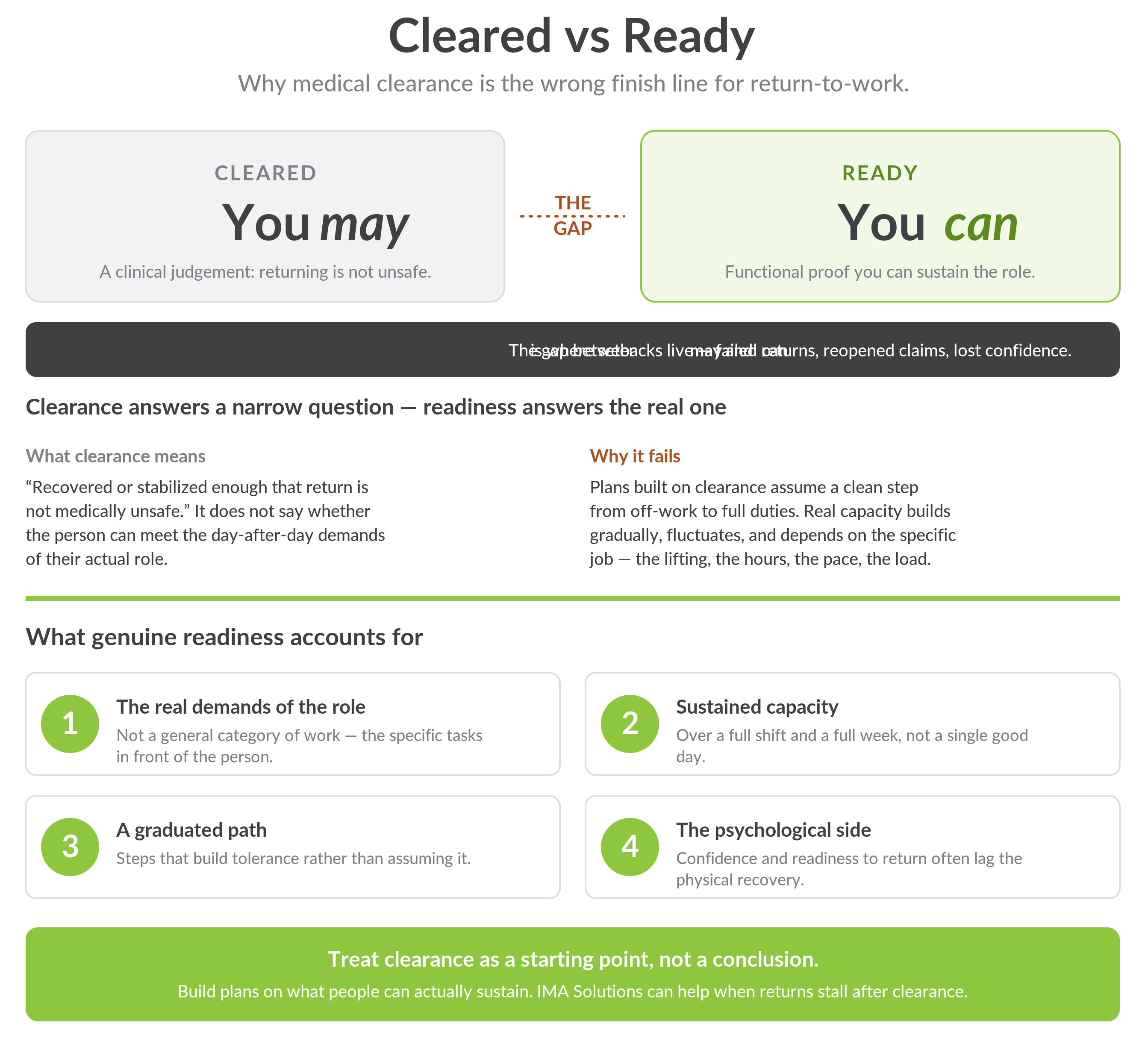
Cleared says you may. Ready says you can. The gap between the two is where setbacks live.
Why the gap matters
A return-to-work plan built on clearance alone tends to assume a clean step from off-work to full duties. Real recovery rarely works that way. Capacity builds gradually, fluctuates, and depends heavily on the specific job. A worker cleared in general terms may still be unable to meet the lifting, the hours, the cognitive load, or the pace their role actually requires.
When the plan ignores that, the return fails, the claim reopens, and the person ends up further back than before, often with their confidence knocked along the way.
What readiness looks like
Readiness is functional and specific. It accounts for:
- The real demands of the role, not a general category of work.
- Sustained capacity over a shift and a week, not a single good day.
- A graduated path that builds tolerance rather than assuming it.
- The psychological side of return, which often lags the physical recovery.
This is where objective functional assessment earns its place. Rather than asking only whether someone is medically cleared, it asks what they can sustain and matches that against the job in front of them.
Building plans that hold
The most durable return-to-work plans treat clearance as a starting point, not a conclusion. They use functional evidence to set realistic limits, build in graduated steps, and plan for the fluctuation that's normal in recovery. They cost a little more attention up front and save a great deal of cost, time, and disruption later.
If your return-to-work plans are stalling after clearance, ours team can help you build them on what people can actually sustain.